There’s a particular kind of tension that only a courtroom can generate. It isn’t the tension of a car chase or a ticking bomb — it’s slower, tighter, and somehow more personal. It’s the tension of an attorney standing up to ask one more question, knowing the whole case could turn on the answer. That tension is the engine of the legal thriller, one of the most enduring and widely read subgenres in modern fiction.
This guide is built for readers who love that feeling — the courtroom drama, the moral gray areas, the sense that justice is never quite as clean as the law books promise. Whether you’re new to legal suspense or you’ve already read every John Grisham novel twice, consider this your complete map to the genre: what defines it, where it came from, how a courtroom thriller differs from its cousins in crime fiction, what separates good attorney novels from great ones, and which books and authors deserve a permanent spot on your shelf.
What Is a Legal Thriller?
A legal thriller is a novel built around the machinery of the law — trials, investigations, legal ethics, and the people who work inside (or against) the justice system — fused with the pacing and stakes of a traditional thriller. The genre sits at a crossroads: part courtroom drama, part suspense novel, part character study of ordinary people forced into extraordinary, high-stakes decisions.
At its core, a legal thriller usually contains several recognizable ingredients:
- A protagonist connected to the legal profession. Almost always an attorney, though sometimes a judge, paralegal, private investigator, or even a wrongly accused defendant forced to think like a lawyer to survive.
- A central case or crime that drives the plot. A murder trial, a corporate fraud investigation, a wrongful conviction, or a conspiracy that only unravels through legal discovery.
- Escalating personal risk. The best legal thrillers never let their protagonists stay safely behind a desk. As the case deepens, the attorney’s career, relationships, or life are increasingly on the line.
- A ticking clock. A trial date, a statute of limitations, an appeal deadline, or a killer closing in — legal thrillers borrow pacing devices from the broader thriller tradition to keep pages turning.
- Procedural authenticity. Readers expect legal details — how a deposition actually works, what a motion to dismiss does, the strategy behind jury selection — to feel real, even when the plot itself is larger than life.
That last point is worth dwelling on. Legal thrillers occupy a strange, useful space between entertainment and education. Millions of readers have absorbed more about how the justice system actually functions from novels than from any civics class, simply because a gripping story is a far better delivery vehicle for information than a lecture ever could be. That’s a large part of why the genre has remained commercially and critically durable across more than half a century of shifting fiction trends.
Legal Thriller, Legal Suspense, Courtroom Thriller, or Attorney Novel? Understanding the Terminology
Readers, publishers, and booksellers often use these four terms interchangeably, but each carries a slightly different emphasis. Understanding the distinctions can help you find exactly the kind of read you’re in the mood for.
Legal Thriller
This is the umbrella term for the entire category. A legal thriller is any thriller in which the legal system — its rules, its personnel, its processes — sits at the center of the plot. The story doesn’t have to unfold primarily in a courtroom; it simply has to be driven by legal stakes, whether that’s a criminal trial, a civil lawsuit, a regulatory investigation, or a constitutional showdown. Nearly every book discussed in this guide falls under this broad heading.
Legal Suspense
“Legal suspense” tends to describe books that lean harder into psychological tension and slow-burn dread than into fast-paced action. A legal suspense novel might spend more time on the emotional toll of a case, the creeping paranoia of being investigated, or the moral compromises a character makes chapter by chapter. Think less “explosive climax,” more “creeping unease that tightens with every page.” The line between legal thriller and legal suspense is genuinely blurry — many books are marketed as both — but if you gravitate toward atmosphere and interiority over pure plot velocity, “legal suspense” is the label to search for.
Courtroom Thriller
A courtroom thriller is a legal thriller that specifically foregrounds the trial itself: cross-examinations, objections, jury dynamics, closing arguments. Not every legal thriller spends significant time in an actual courtroom — some are almost entirely investigative or political — but a courtroom thriller promises readers that the real drama happens under oath, in front of a judge and jury. If you love the theater of a devastating cross-examination scene, this is the label that will steer you correctly.
Attorney Novels
“Attorney novels” is a broader, more informal category encompassing any fiction centered on lawyers and legal practice, whether or not it qualifies as a thriller. This includes legal thrillers, but also legal dramas, literary fiction about the practice of law, and legal-themed mysteries that lean cozy rather than suspenseful. If a book’s central appeal is watching an attorney navigate their professional world — the ethics, the office politics, the exhausting hours — it likely falls under this wider umbrella, even if the pacing is more contemplative than thrilling.
Knowing these distinctions can meaningfully sharpen your next search. Want nonstop action with a legal backdrop? Search “legal thriller.” Want a slower psychological unraveling? Look for “legal suspense.” Want the courtroom scenes themselves to be the main event? “Courtroom thriller” is your filter. Want the broadest possible net of lawyer-centered fiction? “Attorney novels” will get you there.
A History of the Legal Thriller
The legal thriller as we know it didn’t spring up overnight. Courtroom fiction has roots stretching back to the 19th century, but the modern genre took its recognizable shape in the second half of the 20th century, through a handful of pivotal figures.
Erle Stanley Gardner planted an early flag with his Perry Mason novels, which began in the 1930s and ran for decades. Gardner, a trial lawyer before he became a novelist, built a formula that still echoes through the genre today: a brilliant defense attorney, a client who appears guilty, and a dramatic courtroom reveal that exonerates the innocent while exposing the true culprit. Perry Mason essentially established the courtroom thriller as commercial fiction, decades before the term existed.
The genre simmered for years before its next major leap. That leap had a name: Scott Turow. His 1987 novel Presumed Innocent is widely credited as the book that redefined what a legal thriller could be — morally complex, psychologically dense, and unwilling to hand readers easy answers. Turow, a practicing attorney and former federal prosecutor, brought an insider’s eye to prosecutorial politics and courtroom strategy that readers hadn’t previously seen rendered with that level of nuance. Presumed Innocent proved the genre could carry real literary weight.
Then came John Grisham. If Turow proved the legal thriller could be literary, Grisham proved it could be a commercial phenomenon. Starting with A Time to Kill in 1989 and breaking through with The Firm in 1991, Grisham became one of the best-selling novelists in the world, and in the process essentially invented the modern legal thriller as a mass-market category unto itself. His formula — an idealistic young attorney, a corrupt institution, a race against powerful adversaries — has influenced nearly every legal thriller written in the decades since, and his continued output has kept the genre in the cultural spotlight for over thirty years.
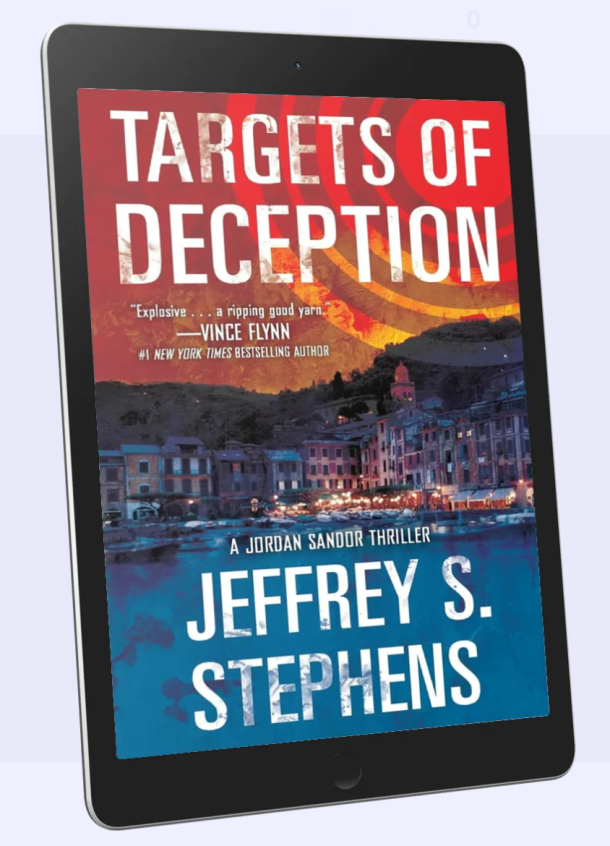
From there, the genre diversified rapidly. Writers like Lisa Scottoline, Steve Martini, Linda Fairstein, and Robert Dugoni brought new protagonists, new specialties, and new regional settings into the fold — prosecution-side stories, forensic-heavy plots, all-female law firms, small-town courtroom dramas. More recently, a new generation of attorney-novelists has continued that tradition. Writers who, like Turow and Grisham before them, bring genuine courtroom mileage to the page — among them Jeffrey S. Stephens, a longtime New York and Connecticut trial attorney whose 2025 novel Illusions of Trust launched a new legal thriller series grounded in decades of firsthand legal practice, blending courtroom authenticity with the political and criminal conspiracy plotting that defines the genre’s current era.
Why Legal Thrillers Work: The Psychology of the Genre
It’s worth pausing to ask why this particular genre has such staying power across generations of readers. A few structural reasons stand out.
The law is inherently dramatic. A trial is structured conflict by design. Two sides present competing narratives, a neutral party — judge or jury — decides who’s right, and the outcome carries real, often irreversible consequences. That structure is essentially a built-in three-act play, which is part of why courtroom scenes translate so naturally to fiction and film alike.
Moral ambiguity is baked into the premise. Unlike thrillers where good and evil are drawn in bold lines, legal thrillers routinely force readers to sit with uncomfortable questions: What if the guilty client deserves a competent defense? What happens when the law and justice point in different directions? What if the system itself is the true antagonist? That ambiguity gives the genre a literary weight that pure action thrillers sometimes lack.
Insider knowledge is genuinely fascinating. Most readers will never sit through a murder trial, negotiate a plea deal, or draft a motion for summary judgment. Legal thrillers offer a window into a closed world with its own language, rituals, and power dynamics — and the strongest authors, particularly those who’ve practiced law themselves, render that world with a level of texture that research alone can’t always replicate.
The stakes are personal and professional at once. A great legal thriller protagonist isn’t only trying to win a case; their career, reputation, marriage, or freedom is frequently on the line too. That doubling of stakes creates a richer emotional core than genre fiction sometimes offers, and it’s why the best legal thrillers linger with readers long after the verdict is read.
Anatomy of a Great Legal Thriller
Not every novel with a lawyer protagonist earns a place among the genre’s best. The standout legal thrillers — and the standout courtroom thrillers specifically — tend to share several identifiable traits:
- Authentic legal detail. Readers can tell when procedure is fudged purely for convenience. The strongest legal thrillers get the details right, or bend them deliberately and knowingly in service of the story, rather than out of ignorance.
- A protagonist worth rooting for, flaws and all. The best legal thriller heroes aren’t flawless crusaders; they’re compromised, exhausted, occasionally cynical people who still choose to fight for something bigger than themselves.
- An antagonist — or system — that feels genuinely dangerous. Whether it’s a corrupt corporation, a powerful family, or the justice system itself, the opposition needs real teeth and real reach.
- A plot that escalates logically. The best legal thrillers don’t pile on twists purely for shock value; each revelation should reframe what came before and meaningfully raise the stakes.
- A satisfying, earned resolution. Legal thrillers often build toward a climactic trial, confession, or reveal. When that payoff lands, it’s because the author has been quietly, carefully building toward it from page one.
Popular Legal Thriller Subgenres and Themes
As the genre has matured over the decades, it has branched into several recognizable niches worth knowing:
- Wrongful conviction thrillers, where the protagonist races to prove an innocent person’s innocence before an execution or an unjust sentence is carried out.
- Corporate and white-collar legal thrillers, which trade murder investigations for financial fraud, corporate cover-ups, and civil litigation with criminal undertones simmering just beneath the surface.
- Political and conspiracy-driven legal thrillers, where a case that initially appears routine — a divorce, a small claim, a minor investigation — unravels into a much larger web involving corruption at the highest levels of government or industry.
- Prosecutorial thrillers, told from the perspective of a district attorney or prosecutor rather than a defense attorney, often focused on the ethical costs of pursuing convictions.
- Small-town legal thrillers, which trade big-city law firms for rural or Southern settings where everyone knows everyone, and legal battles double as community reckonings.
- Investigator-attorney partnerships, a structure that pairs a lawyer with a private investigator or retired law enforcement officer, blending courtroom strategy with old-fashioned detective work — a combination that has become increasingly common in the genre’s current wave.
How to Start Reading Legal Thrillers
If you’re new to the genre, the best approach is to pick a single subgenre or theme that appeals to you and start there, rather than trying to read broadly all at once.
- Fans of courtroom drama should start with heavily trial-focused books — anything built around cross-examinations and closing arguments.
- Fans of psychological depth should look toward legal suspense, where the courtroom matters less than the slow moral unraveling of the characters involved.
- Fans of political intrigue should look for legal thrillers that widen out from a personal case into conspiracy territory touching government or corporate power.
- Fans of series fiction should seek out authors who’ve built ongoing runs around a recurring attorney protagonist, letting a character’s career and worldview evolve across multiple books.
It’s also worth paying close attention to author background. Many of the genre’s most respected voices — from Turow and Grisham to newer entrants like Jeffrey S. Stephens — practiced law before, or while, writing fiction. That real-world legal experience tends to show up on the page as a kind of texture that’s difficult to fake: the small procedural details, the internal logic of legal strategy, the psychological toll of adversarial work. If authenticity matters to you as a reader, seeking out attorney-turned-novelist authors is one of the most reliable signals of quality in the genre.
Legal Thrillers vs. Legal Dramas on Screen
It’s worth acknowledging that many readers come to legal thrillers after falling in love with courtroom drama on television or in film — shows and movies built around trials, depositions, and legal maneuvering. The novel form offers something the screen often can’t: extended, uninterrupted access to a character’s internal reasoning. On the page, readers don’t just watch an attorney make a risky decision in the courtroom; they follow the entire chain of doubt, calculation, and gut instinct that led there. That interiority is a major part of why so many screen adaptations of legal thrillers — Grisham’s work alone has inspired numerous films — still send audiences back to the source novels. The book simply goes deeper into the “why” behind every legal maneuver than a ninety-minute runtime ever could.
Frequently Asked Questions About Legal Thrillers
Is a legal thriller the same as a mystery? Not exactly. A mystery is defined by a puzzle to be solved — usually “whodunit.” A legal thriller can include a mystery element, but its core structure is built around the legal process itself: investigations, motions, trials, and the professional and personal risks facing an attorney or legal professional. Many legal thrillers are also mysteries, but not all mysteries qualify as legal thrillers.
Do legal thrillers need to be set in a courtroom? No. Some of the genre’s most gripping entries spend relatively little time in an actual courtroom, focusing instead on investigation, negotiation, and the long buildup to a trial that may or may not ultimately happen. The legal stakes define the genre far more than the physical setting does.
Are legal thrillers realistic? It varies widely by author and book. Attorney-turned-novelists tend to bring a higher baseline of procedural accuracy, since they’re drawing on real courtroom and case experience rather than research alone. That said, nearly every legal thriller takes some dramatic license — real trials rarely move as fast, or resolve as cleanly, as they do on the page. The best authors know exactly which liberties to take and which details to get right, so the fiction feels authentic even when it’s been heightened for drama.
What’s the difference between a legal thriller and legal suspense, really? Mostly pacing and tone. A legal thriller tends to move faster and lean harder into external plot mechanics — twists, danger, a ticking clock. Legal suspense tends to slow down and dig into psychological tension and moral ambiguity. Many books blend both, and the labels are often used interchangeably by publishers and booksellers alike.
Who should read legal thrillers? Fans of mystery, suspense, and character-driven drama all tend to find something to love in the genre. If you enjoy watching smart, flawed people solve complicated problems under enormous pressure — and you don’t mind a story that asks uncomfortable questions about justice along the way — legal thrillers are well worth your time.
Why Legal Thriller Novels Continue to Captivate Readers
The legal thriller endures because it taps into something universal: our fascination with justice, and our discomfort with how imperfectly it’s often served. Whether you’re drawn to the theatrics of a courtroom thriller, the slow-burn dread of legal suspense, or simply the pleasure of watching a smart attorney outmaneuver a powerful adversary, there’s a corner of this genre built for you.
From Erle Stanley Gardner’s Perry Mason to Turow’s Presumed Innocent, from Grisham’s genre-defining bestsellers to the current wave of attorney-novelists carrying the tradition forward, legal thrillers remain one of fiction’s most reliable sources of intelligent, high-stakes entertainment. Explore the subgenres, follow the authors whose real-world legal experience speaks to you, and let the next great courtroom thriller keep you up past your bedtime, one chapter at a time.
Continue exploring Jeffrey S. Stephens: browse his books, read reviews, or learn more about the author. Readers can also visit his TV appearances and radio appearances for additional background and interviews.